We compiled some of the best Iraq and Afghan PT videos. We need people to choose which one they like the best. Comment below to choose or comment on our social sites.
Iraqi Jumping Jacks 1
Afghani Pushups
Afghani Jumping Jacks
The Iraqi Armed forces is composed of three branches: the Army, Navy, and the Air Force. Since the destruction of the Iraqi government under the leadership of Saddam Hussein, the country’s armed forces have slowly been rebuilding with the assistance from the US Army.
The army has been badly hit in the past during the Iran-Iraq war, its defeat during the Gulf War, and the 2003 Iraq invasion by the US forces in search of weapons of mass destruction. Shortly after the invasion, the military was dissolved in May of 2003. In June of that same year, 9,000 recruits were trained to become the “New Iraqi Army,” which served as a temporary agency while order was still being established within the new government and the streets. In 2008, the new Iraqi Army launched its first solely planned operation in Basra to drive the Mahdi militia out of the said Iraqi city.
The army is equipped with BMP-1 infantry and T-54/55 battle tanks. Armed forces of other countries have donated equipment and training personnel to the Iraqi army to help them re-establish their presence in the country, such as the Hungarian Armed Forces which donated 77 T-72 tanks.
In recent news, the Iraqi Army is currently fighting ISIS, an Iraqi insurgency group with roots tied in Al-Qaeda.
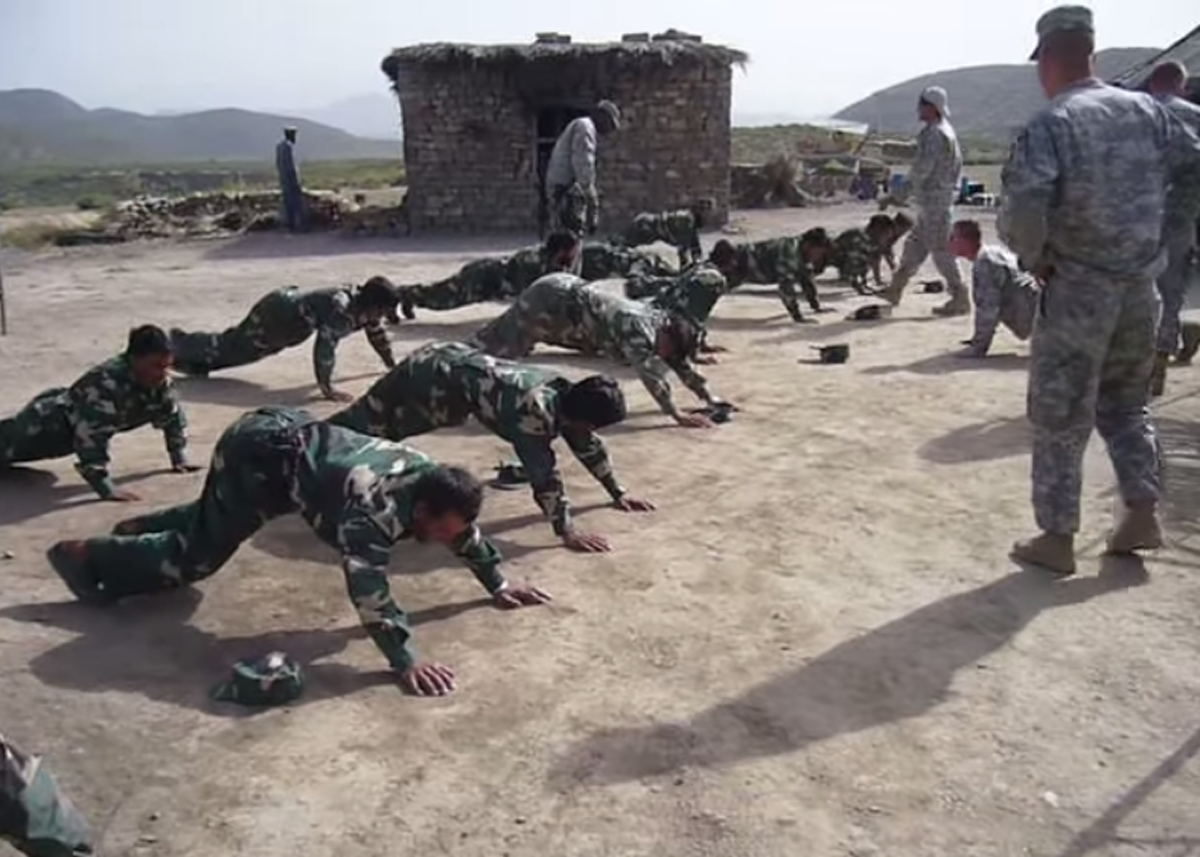
We compiled some of the best Iraq and Afghan PT videos. We need people to choose which one they like the best. Comment below to choose or comment on our social sites.
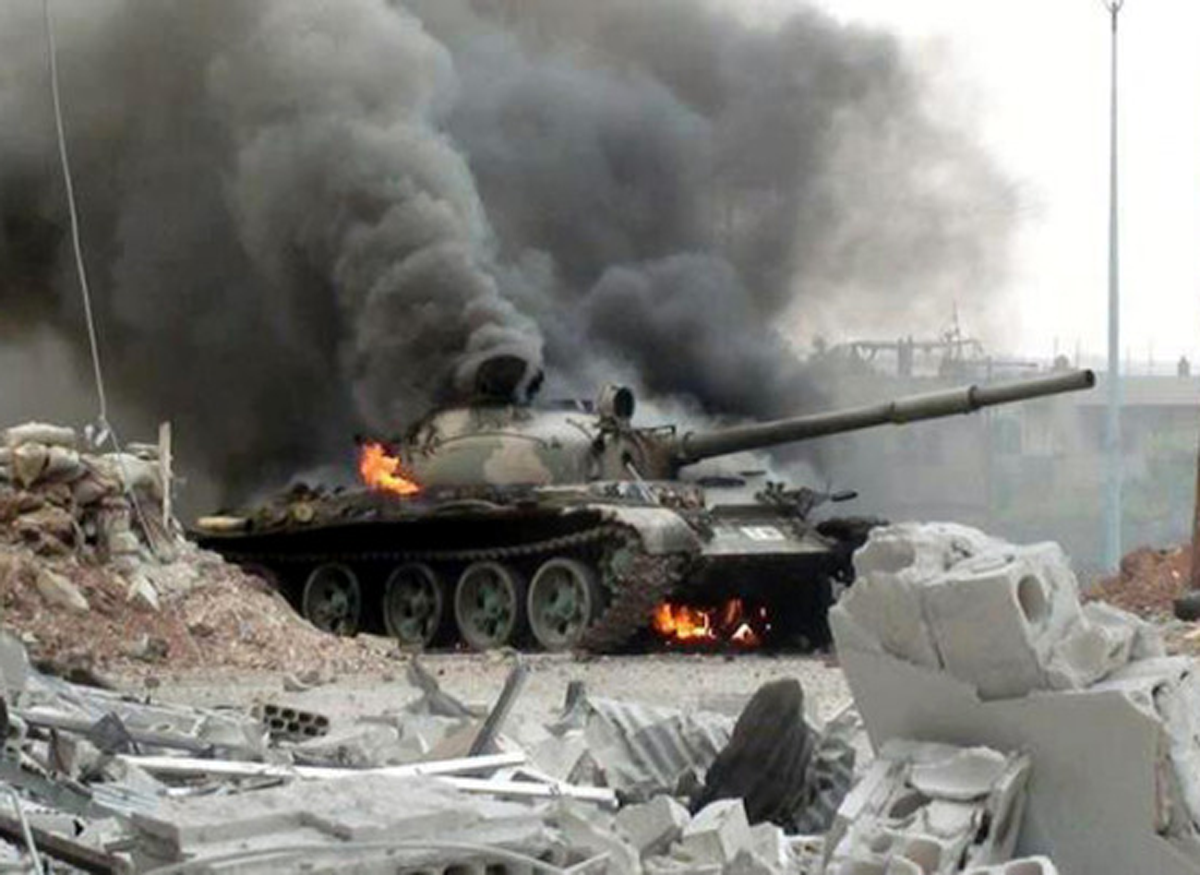
The ongoing ISIS movement and its repercussion from the coalition forces have been in the news for some time now and is a very controversial issue in America and in the Middle East today. The spotlight is on Islamic Terrorism and the Syrian Civil War. This video shows one tank being destroyed and another shot with most probably an RPG. This particular video is not ISIS in Iraq, but that of the Free Syrian Army attacking a Syrian government convoy back in 2012.
Whatever may be the real case behind the scene, the scene sure is one of the rare real life shots captured related to the ongoing Syrian Civil War. The war began in 2011 as a chain reaction to the so called Arab Spring and now being led by the various groups within Syria and Iraq. ISIS, FSA and YPG are three of the major Middle Eastern factions, opposing the present Syrian government, that are involved in the war along with the intervention from the western coalition forces. ISIS is also against the government of Iraq and Iran, causing strange bedfellows. Nontheless, this video of tanks blowing up is great to watch.
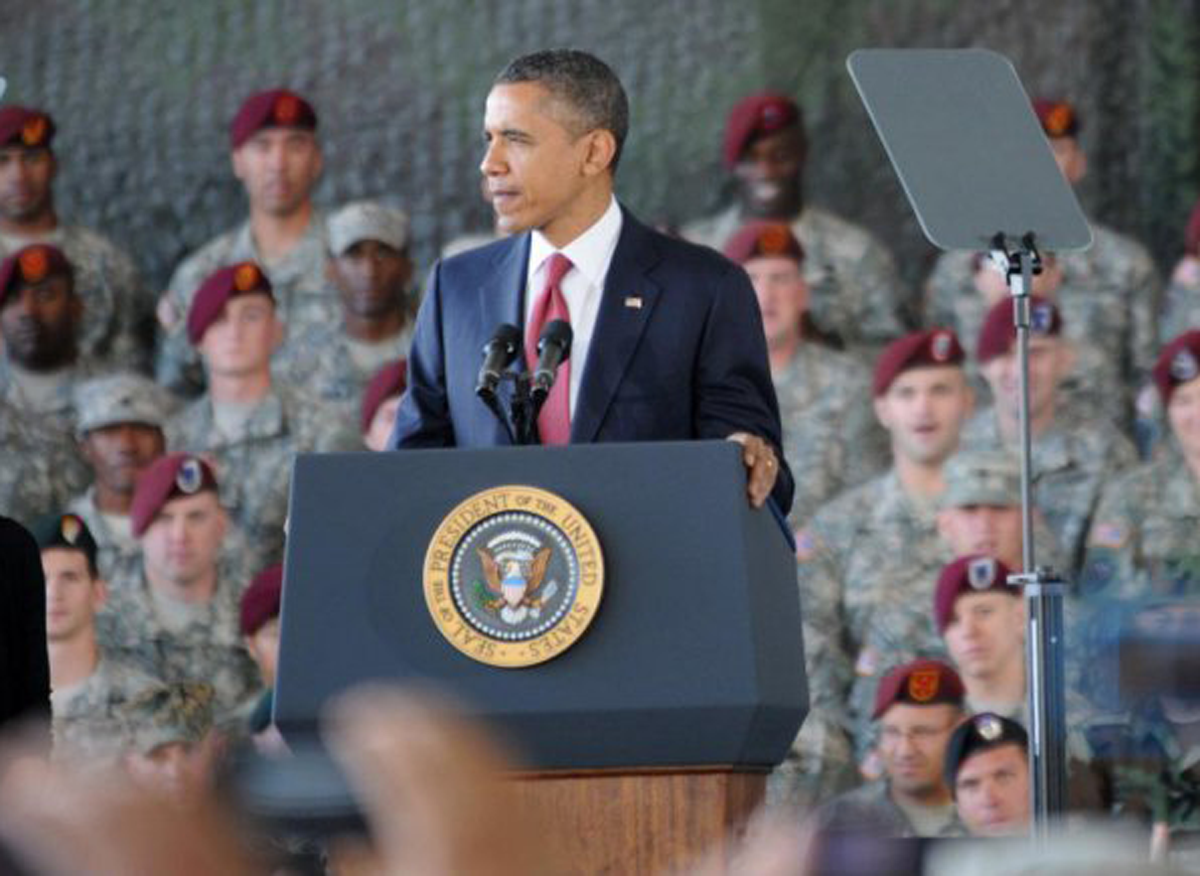
President Barack Obama has signed a new deployment directive to send additional soldiers to Iraq. The extra 1500 troops were sent by the Obama administration to serve in Iraq as advisers, security, and trainers. Most of them will reach Iraq by December. This means that the number of US troops will reach up to around 3,000. The president is asking for additional funding from the Congress to send to Iraq – or at least $5 billion to append to the Iraq funds.
A statement from the White House says that the new troops will not actually be fighting in Iraq, but will be working as supervisors, strategists, and trainers in the field. The troops will be working to assist the military that is already available there who are fighting ISIS / ISIL.
Many Americans and critics are seeing this as a gradual buildup, similar to the buildup in Vietnam that happened slowly over time. Thinking back to the Korean War, this seems to be like mission creep similar to when General MacArthur changed the mission from driving the North Koreans out of South Korea to conquering North Korea and taking the fight to China with nuclear weapons. China ended up invading and driving the Americans back to the 38th Parallel. With Operation Iraqi Freedom being over, it seems that there is a resurgence to get the US involved over there again.
If it is going to happen again, it needs to happen with a clear mission, overwhelming force, and approval from congress.
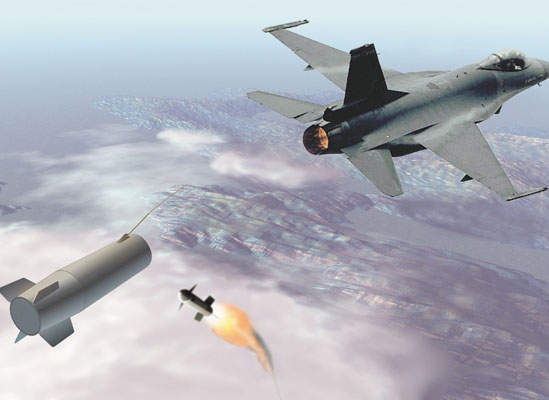
The ALE-50 Towed Decoy system, also known as “little Buddy,” is a state-of-the-art defense system designed by Raytheon. The main objective of the system is to create an effective countermeasure to defend American aircraft against radar-directed missiles. This anti-missile countermeasure decoy system is currently used for different U.S. Air Force, Navy, and Marine Corps aircraft, in addition to some other air forces.
The system has been used in various combats, where the ALE-50 Towed Decoy System successfully demonstrated its effectiveness in thwarting enemy missile attacks. Thus, there is now very little skepticism about what the “Little Buddy” can do.
The ALE-50 Towed Decoy System is the fruit of collaboration of an integrated product team containing experts from Raytheon, the U.S. Air Force, and the U.S. Navy. The team worked on this groundbreaking concept at a Goleta, California facility.
The first deployment of the system dates back to 1995. Nonetheless, the system is currently used on multiple aircraft that include the F/A-18E/F Super Hornet and the B-1B Lancer. Further, The system has also been incorporated into the innovative ALQ-184(V)9 ECM pod. This integration has helped the system become more vigilant towards threats, and it has also enabled it to be ready to be used on numerous platforms.

If the ALE-50 Towed Decoy System has been in service for more than ten years, now, it’s because it has efficaciously demonstrated its wide range of capabilities. When employed, the system shields the aircraft and crew against guided missiles (surface-to-air and air-to-air missiles). The system lures the missile toward a more attractive target and away from the intended one. The decoy that the system utilizes is used when required and cut free before landing. The “Little Buddy” offers the possibility of being operated manually as an independent device. However, it can also be incorporated and controlled by the ALE-47 Airborne Countermeasures Dispenser System (made by BAE Systems).
In 1999, the ALE-50 Towed Decoy System was tested in Yugoslavia. The results were reportedly very encouraging. Hence, Air Force Officials reported that the system locked down and diverted 10 of 30 surface-to-air missiles that had been fired at B-1 bombers in different parts of Yugoslavia.
United States Government Accountability Office (GAO) confirmed that planes that have the ALE-50 Towed Decoy System installed in them are more likely to escape fatal enemy attacks. In a report to Congressional Committees in 1997, the GAO expressed its satisfaction regarding how this system improves survivability, and stated that test results indicate the ALE-50 Towed Decoy System, “offers improved effectiveness against radar-controlled threats.” Based on these results, the GAO recommended further use of the system on other platforms such as the F/A-18C/D that the Navy uses.
As far as the specifications of the ALE-50 Towed Decoy System are concerned, the system is equipped with a launch controller, as well as a launcher that is usually installed on the plane’s wing pylon, in addition to one or more expandable towed decoys, which has a shelf-life of ten years.
When speaking about the ALE-50 Towed Decoy System, Pat Hurley, vice president and general manager of Raytheon Electronic Warfare Systems, reiterated that, throughout its 50 years of existence, the company has always been concerned with developing its systems in order to provide the military with high-performing products. In this regard, Hurley added that the permanence of the company’s business and of the ALE-50 Towed Decoy System is a valid testimony to the company’s “high-performing products,” as well as its “laser-like focus on serving the customer.”
Many experts consider Raytheon to be a leading provider of systems that offer pilots with the most precise information available. With its $22 billion of sales in 2005, the company is also regarded as a leader in defense systems, information technology as well as business and special mission aircraft. The company has a workforce of about 80,000 deployed throughout the world.
Raytheon manufactures and sells the ALE-50 expendable decoy at $22,000 per unit. In October 2010, the company made a delivery of its latest production run (1,048 units). The total number of units that Raytheon has produced is estimated at 35,000 units, increasing the company’s sales to more than $500 million.

Raytheon has now produced 25,682 units of the system. All of the units have been purchased by the US Department of Defense at a cost of $500 million ($22,000 per unit). The system was initially installed on F-16s only with plans of implementation on other platforms. Therefore, these plans have been carried out systematically and have now been completed successfully. Thus, the “Little Buddy” is currently installed on the B-1B bombers and F/A-18 aircraft.
In 2005, Raytheon received a production contract from the US Navy and the US Air Force. In late 2006, The US Air Force granted the manufacturing company a production contract for 862 decoys worth $21 million.
The system’s adaptability and reasonable cost enables it to be installed on a variety of aircraft. Thus, the ALE-50 Towed Decoy system now functions on many aircraft such as the F-16, F/A-18E/F, and B-1B aircraft.
The usefulness of the system has been proven in many situations. ALE-50 Towed Decoy System has shown its capabilities in every major war in which it was deployed. For instance, it considerably helped improve the survivability of aircraft and their crews in places like Kosovo, Afghanistan and Iraq.
In this regard, Col. Art Huber, commander of the 542nd Combat Sustainment Group at Warner Robins Air Logistics Center, which is in charge of the ALE-50 praised the ALE-50 Towed Decoy System by saying that it is “credited with numerous aircraft saves,” and that “our pilots depend on it.”
The “Little Buddy” is probably the best countermeasure in use, right now. Tests and actual use in wars have proven its efficacy. The ALE-50’s suitability and interoperability with other B-1B systems when installed in the B-1B bombers have been quite a success. Furthermore, the pricing is very encouraging, and the quality/price ratio has been a determining factor in making the system a must for every aircraft in service. This is why, many pilots who have been to war in different parts of the world have communicated that the ALE-50 Towed Decoy System has been critical in saving them and their aircraft from the dangers of guided missiles.

Before we get into the specifics of the MQ-9 Reaper Drone, one of the deadliest drones in the US arsenal, we must first cover some history.
A third of the US Air Force’s aircraft is estimated to comprise of drones today. The concept of drones is not a new one. The history of drones or Unmanned Aerial Vehicles (UAVs) dates back to the 1930s with the development of the “Queen Bee” by the British Royal Navy. However, it was not until 1995, that concerted efforts were commenced by the United States to develop drones for military applications. The MQ-1 Predator (Predator A) was first put into use in 1995. It began as a surveillance vehicle and data gatherer, but was later fitted with Hellfire Missiles, for targeting suspected terrorists. It was created as a result of a directive from the Department of Defense for counter-insurgency measures at overseas locations.
As a result of the war with Iraq, and in the aftermath of the 9/11 attacks, a need was felt to step up counter-terrorist measures by the US armed forces. The ongoing war with Afghanistan also reinforced this conviction. In 2007, the first test flights of the MQ-9 Reaper Drone were carried out at the Creech Air Force Base in Nevada. This new series of drones was first pressed into service in actual combat in Iraq and Afghanistan later during the same year. This was followed by successful missions in other countries like Ethiopia and Libya.

The MQ-9 Reaper Drone (Predator B) was developed as an improvement to the MQ-1 Predator (Predator A). It is bigger and better than the MQ-1 Predator in terms of power and munitions delivery. The codification of the drone is as follows: “M” stands for Mulirole, “Q” for Unmanned Aerial Vehicle and “9” is the series designation.3
This drone is described as an armed drone of medium, multi-mission, medium-altitude capabilities. Its primary function is that of intelligence collection and the secondary function is attack on dynamic execution targets.
The MQ-9 Reaper is totally remote-controlled. It is fitted with a Multi-Spectral Targeted System, consisting of visual, infra-red and laser sensors. The munitions system is also laser-guided. The suite of functions that the Reaper can perform is surveillance, reconnaissance, precision strike, search and rescue during combat, convoy/raid over-watch, air support, buddy-laser, and terminal air guidance, development of targets and clearance of routes. The aircraft is fully-equipped with sensors and weapons with a satellite link between the drone and the ground control station. The entire aircraft can be dismantled and transported in a C-17 transporter or larger, but is also capable of independent taking off and landing from a standard US airfield.
Here is a summary of some of the specifications of the MQ-9 Reaper:
Specifications
| Primary Function | Intelligence collection & reconnaissance |
| Contractor | General Atomics Aeronautical Systems, Inc. |
| Power plant | Honeywell TPE331-10GD turboprop engine |
| Thrust | 900 shaft horsepower |
| Wingspan | 66 feet (20.1 meters) |
| Length | 36 feet (11 meters) |
| Height | 12.5 feet (3.8 meters) |
| Weight | 4,900 pounds (2,223 kilograms) empty |
| Fuel Capacity | 10,500 pounds (4,760 kilograms) |
| Payload | 4,000 pounds (602 gallons) |
| Speed | 3,750 pounds (1,701 kilograms) |
| Range | Cruise speed approx. 230 mph |
| Ceiling | 1,150 miles (1,000 nautical miles) |
| Armament | Up to 50,000 feet (15,240 meters) |
| Crew | AGM-114 Hellfire missiles, GBU-12 Paveway II and GBU-38 Joint Direct Attack Munitions |
| Unit Cost | $56.5 million (4 aircraft with associated equipment) |
The primary customer of the MQ-9 Reaper is the US Air Force and the US Government. However, the sale of this drone is not restricted to the US alone. In 2011, the US Department of Defense signed a contract with General Atomics Aeronautical Systems to supply 24 extra systems of the MQ-9 Reaper to the Italian Air Force. The total value of the contract was tagged at $15,053,926.
In 2013, the Netherlands declared that it would be acquiring its own fleet of Reapers by the year 2017, amounting to 4. Today, France and the UK are also using MQ-9 Reapers, making this drone a global product.

The MQ-9 Reaper has had a good tour of duty. However, it is likely to be replaced by the next generation of drones. The Army is now developing the successor to the Reaper – the Avenger (Predator – C), a sleeker and more robust design, compared to the Reaper. The main features which differentiate the Avenger from the Reaper is that the Avenger is jet-propelled and it is has stealth properties and the cruise speed is double that of the Reaper.
If we consider the track record of the MQ-9 Reaper, it would be fair to say that it has had a fairly successful journey. One thing is sure, and that is, unmanned aircraft will play a prominent role in the US Air Force in the future years. When Secretary of Defense, Robert M Gates addressed the Air Force Academy in 2011, he mentioned that although there will always be a need for manned flight in the US military, there is a great scope for the development of remotely piloted vehicles, for reconnaissance and strike. “I see no excuse for men in fighter planes to shoot down bombers,” he says, “The next Air Force is going to be built around scientists.”
It appears the MQ-9 Reaper Drone will continue to see heavy use for many years to come, until such a time as it is fully replaced by the Predator 3 and future models.